Lucy K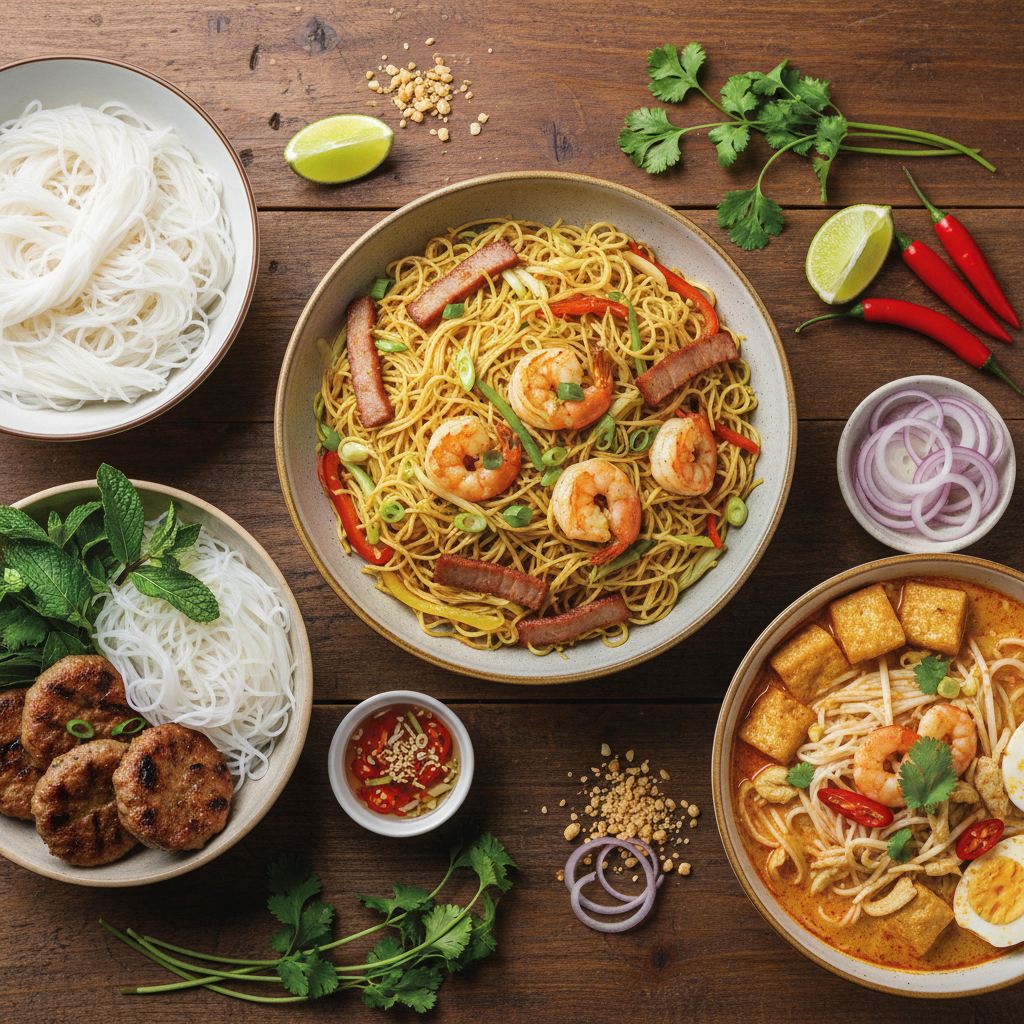
Did you know that rice noodles are a staple food for over two-thirds of the world’s population? That’s a staggering number, and it highlights just how fundamental these versatile strands are to global cuisine.
Among the vast array of rice noodle types, Mei Fun (also known as rice vermicelli or mǐfěn in Mandarin) stands out as a beloved and widely enjoyed option. But what exactly is Mei Fun, and why is it so popular? Let’s take a delicious dive into this culinary favourite.
The Essence of Mei Fun: Simple Ingredients, Big Flavour
At its core, Mei Fun is incredibly simple. It’s made from just two main ingredients: rice flour and water. This basic combination is then processed into thin, delicate strands, often resembling vermicelli pasta. The magic of Mei Fun lies in its neutral flavour profile, which makes it a perfect canvas for a wide variety of sauces, broths, and other ingredients. This adaptability is a key reason for its widespread appeal across many Asian cultures.
The production process typically involves mixing rice flour with water to create a dough, which is then extruded through small holes to form the characteristic thin strands. These noodles are then usually steamed or boiled and dried. The result is a light, airy noodle that cooks very quickly, making it a convenient choice for busy kitchens.
A World of Variety: Mei Fun Across Different Cuisines
While the basic ingredients remain the same, Mei Fun takes on different forms and culinary roles depending on the region.
Chinese Mei Fun
In Chinese cuisine, Mei Fun is incredibly versatile. It can be found in stir-fries, where its delicate texture absorbs sauces beautifully. A classic example is Singapore Noodles, a popular dish that, despite its name, is believed to have originated in Hong Kong.
This dish often features Mei Fun stir-fried with shrimp, char siu pork, egg, and a vibrant curry powder seasoning that gives it a distinctive colour and aroma. Mei Fun is also commonly used in soups, providing a light and satisfying base for flavorful broths.
Southeast Asian Adaptations
Across Southeast Asia, variations of rice vermicelli are equally popular. In Vietnam, bún refers to a variety of rice vermicelli dishes. While bún can be thicker than some Chinese Mei Fun, the principle is the same: a base of rice noodles served with a multitude of toppings and sauces. Dishes like Bún Chả (grilled pork with noodles) and Bún Thịt Nướng (grilled meat with noodles) showcase the noodles’ ability to carry complex flavors.
In Malaysia and Singapore, Mei Fun is a staple in dishes like Laksa, a spicy noodle soup that can be made with various types of noodles, including thin rice vermicelli. The rich, coconut-milk-based broth is a perfect complement to the delicate noodles.
Cooking with Mei Fun: Quick, Easy, and Delicious
One of the biggest draws of Mei Fun is how incredibly easy it is to prepare. Because the noodles are so thin, they cook in a matter of minutes.
- For Stir-fries: Often, Mei Fun only needs a brief soak in hot water to soften before being added to the wok with other ingredients. Overcooking can make them mushy, so it’s important to add them towards the end of the cooking process.
- For Soups: Mei Fun can be added directly to a simmering broth for the last minute or two of cooking, or it can be cooked separately and added to individual bowls before ladling the hot soup over it.
The key is to be gentle with these delicate noodles. They are not meant for heavy sauces or prolonged cooking, but rather to be a light, pleasing element in a dish. For a deeper understanding of how to prepare and enjoy rice noodles, you can explore this guide to what is Mei Fun.
Nutritional Insights
As a primary source of carbohydrates, Mei Fun provides energy. Being made from rice, it is naturally gluten-free, making it a fantastic option for individuals with celiac disease or gluten sensitivities.
However, like most refined grains, it’s best enjoyed as part of a balanced meal that includes protein, healthy fats, and plenty of vegetables to ensure a well-rounded nutritional profile. According to the USDA, 100 grams of cooked rice vermicelli contains approximately 160 calories and 36 grams of carbohydrates, with minimal fat and protein.
Conclusion
Mei Fun, the humble rice vermicelli, is far more than just a simple noodle. Its versatility, quick cooking time, and gluten-free nature have cemented its place as a beloved ingredient in kitchens worldwide.
Whether it’s soaking up the complex flavours of a Singaporean curry or providing a light base for a Vietnamese soup, Mei Fun offers a delightful culinary experience. So next time you see these delicate strands on a menu or in the grocery store, don’t hesitate to explore the delicious possibilities they offer